Monday, August 29, 2011

Nobody's Children (1952)

Nobody’s Children
Blockbuster Drama for your Mama-Mia


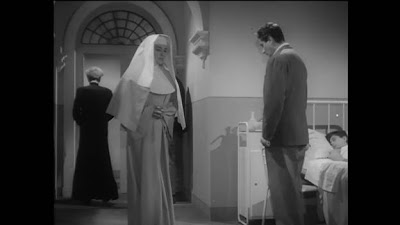
Who is Raffaello Matarazzo? A question I would have found myself floundering on prior to watching his 1952 blockbuster, Nobody’s Children. In fact, looking through the lacking pages of Google and IMDb.com, one could say that I would not be the only one lacking immediate information at your fingertips. Outside of the quintessential filmography lists and the short essays that the Criterion Collection has released as promotion for Matarazzo’s Eclipse collection, there is little to learn about this maestro of Italian cinema, specifically his contribution to the melodrama genre. As Americans flocked to witness the avant-garde from Italian’s now-dubbed neo-realism movement (specifically Umberto D. – as well as others by directors like Rossellini and Visconti), Italians were flocking in masses to watch a different slice of cinema; specifically the melodrama. Like what we currently consider the modern soap opera (or “daytime stories” for the stay-at-home-mom) these were full of overly-acted characters, big-nearly implausible events, and a pitfall plaguing everyone at all turns. Though this sounds depressing, the Italian audiences ate it up and Nobody’s Children became a blockbuster. Demonstrating the sheer influence of modern cinema, Matarazzo realized that he had the potential for more and three years later a subsequent sequel was spawned (see the last film in the Eclipse collection - The White Angel). Yet unlike American blockbusters, one would have difficulty discovering Matarazzo’s work or visually understanding the mass appeal of the Italian melodrama. Despite the box-office bucks, this lesser known director’s body of work went “missing” for decades. Thanks to the Criterion Collection, it has resurfaced for new fans and Italian cinephiles alike.

Nobody’s Children is dark. Perhaps it is too early to say that for those reading this blog for the first time. Let me put it in a different light, Nobody’s Children is not the most optimistic view of the world, specifically in this small corner inhabited by Yvonne Sanson and Amedeo Nazzari. From a foreman that wants nothing more than to swindle his employer out of money and keep morale low, to a fire that destroys the dreams of a dog, all the way to a quarry explosion that ends in a depressing climactic conclusion, Nobody’s Children begins well below the bar and continues to drop in emotion as the minutes grow. Watching Matarazzo felt like my first experience with Requiem for a Dream or Kids, with dark undertones and deeply rooted causation results. Events happened, and due to those character choices, further events took us down the quickening rabbit hole. Like your American soap operas, Matarazzo sets up scenes which force his characters to claw their way out. After the admirably do this, he does nothing more than drop the floor out from under them. Take the idea that true love between Sanson and Nazzari is being demolished by an overbearing mother. Just when Nazzari believes he has a way to bring his mother to his side by bringing the company into the new millennium, she pulls him in deeper by crushing the words being sent to Sanson. This small event eventually spirals into a never-ending struggle to breathe. From believing that his true love had died, to discovering that she is pregnant, to thinking that the baby has died, to falling in love all over again, to a final big surprise by the end – Matarazzo keeps the melodrama in check as he proves that life’s pitfalls continually send you in the wrong direction.


Despite glaring arguments that our actors did a horrible job in containing the melodramatic nature of their characters, I actually thought this was a passionate depiction of life without the Hollywood roses. What impressed me about this film was that the quintessential “happy” ending wasn’t needed to convey the point. What impressed me about this film was, despite how sorrow-filled this film was, it still packed the theaters enough to constitute a sequel. American Hollywood may be able to learn a thing or two about cinema from Matarazzo – as long as it depicts “true” life – then audiences will approve. But, is that why we go to the theater? Matarazzo seemed to abhor “escapism” as we direly desire with the new influx of superhero films and constant uprooting of the horror genre. Could Final Destination 5-000 learn a little something from Matarazzo? The world may never know – but they will appreciate the work of one Raffaello Matarazzo.


Found as one of my five Eclipse films, this was another great adventure. Everything from the scope of the film, to the acting, to the clear lack of the unknown – what was going to happen next – kept me guessing until the very end and overly eager to see the sequel. Like the other Eclipse sets, I cannot wait to see what else is in store with Matarazzo’s work – and I am excited to know that I have seen at least one of this maestro’s films. A green highlight with blue star. This was an impressive discovery.

FILM CLUB #171 too.
Sunday, July 3, 2011

No Blood Relation (1932)

As I delve further into the world of the Eclipse (a subset of the Criterion Collection), my eyes are opened to the film possibilities not offered by America's rich history, or at least the opportunity to see cinema from another world view. As I appreciate (at times) what the US of A has to offer, it is what I have missed in generations past that continues to expand the film horizon. Last film outing involved a woman from Brussels reading letters from her mother along the backdrop of 1970s New York City. Despite how it sounds, this film was a brilliant painting of the unknown, coupled with an over-bearing parent. The resonating voice still speaks today, and now, after that unfamiliar story, I continued into the world of Japanese director Mikio Naruse. Unfamiliar with any of his work as well as the entire universe of silent Japanese cinema, I pushed forward. My first introduction to both man and project was a film entitled, No Blood Relation, a captivating story about a birth mother wanting to connect with her daughter and a step-mother not willing to just forget. With no sound at all (lacking music of any variety), No Blood Relation will entertain, bring emotion forward, and demonstrate what a director with lacking technology can do in the 1930s.

No Blood Relation begins with a robbery. A man running down the street, the words "Purse Snatcher", chasing directly after him, is caught by another man and forced by the community to strip to prove his innocence. Using deft comedy and unfamiliar censorship, he is proven not-guilty as he walks away, only to discover the man who caught him was in on the scheme as well. The duo, walking the docks, talks about how they have a bigger con ready to release onto the world, all they need is the film actress Tamae Kiyuka. As we learn about her immense wealth due to the movies, we are also privy to another story building, the story of a man ready to declare bankruptcy and put his family to shame. In this mix, is a mother who does not want to be poor and a young girl caught in the middle. This young girl is Taemae's child, who she gave up to pursue her acting career, now seven years later, she is back, and wants her daughter to be with her. It is a classic story, one that we can still see today with our modern cinema, but what makes Naruse's tale a bit more powerful is a combination of both detailed acting, lacking sound (which surprisingly works to its advantage here), and limited words. All parts that would randomly not work if placed in another film, but here Naruse is simple, he allows the emotions of his character and the universality of his plot to keep us focused for nearly an hour and a half.

Being a first timer with this, the elements that pulled me further in (and what captured me to watch more) were our actors. Tamae Kiyooka (played by Yoshiko Okada) takes a bit of time to warm up towards, playing the antagonist of the film, we as viewers find ourselves least excited for her. Naruse builds all the blocks against her by leaving all the sympathy on the shoulders of the step-mother, Masako (played brilliantly by Yukiko Tsukuba). The powerful dynamic between these two women couldn't be more polar. One is poor, down on her luck, being driven mad by a mother-in-law whose only concern is personal wealth, and a husband about to go to debtor's prison. The other is a wealthy actress, able to get whatever she wants at the snap of a finger, she is financially happy - but personally miserable as she uses whatever schemes necessary to bring her daughter back to her. As dad remains in prison, we watch as these two fight it out between themselves. The daughter, impressively done by a child star of the 30s, only wants her step-mother, and does everything possible to be back in her arms. Naruse, despite making us feel angry towards the "real" mother's push, continues to build empathy for her plight. As the climax between these two women develops, it is not as easy as you may think to pick the side you want to be on. Does one mother have more rights than the other? Will her past decisions accumulate against her? Does a non-biological mother's love even matter? Naruse throws everything our current social world is debating against/for in a 1930s silent film. The ultimate question becomes - who would you choose at the end of his story?


Needless to say, if I were wearing socks, No Blood Relation as well as the directorial power of Mikio Naruse would blow them off my feet. While he created this simple story, two mothers fighting for the love of their daughter, the emotions that he is able to capture in each frame of the film, is unparalleled to what we see today. I found myself rooting for one, but secretly wondering what was going to happen to the next. While one seemed colder in my eyes, I didn't give up hope for an even resolve. With no sound and maybe 200 translated words, Naruse crafted a powerful film. It impressed me more than I was ready for. No Blood Relation is my first introduction into this genre, and I cannot wait to return. This, in my opinion, would be a phenomenal film studies thesis paper. Who else was crafting this quality of cinema around the world?

It is simple. No Blood Relation is getting a green highlight with blue stars. I will watch this movie again, I will watch more Naruse, and I cannot wait to give this set of films to friends and family for the holidays. Naruse's work easily stands up to today's standards and continues to have legs to walk on. I highly, nay - HIGHLY suggest watching this. Even if silent films are not your evening supper, this will impress you immensely. What a powerful slice of cinema and a bold introduction into the world of Mikio Naruse.

Excellent job Eclipse, Bravo!

Friday, June 24, 2011

News from Home (1977)

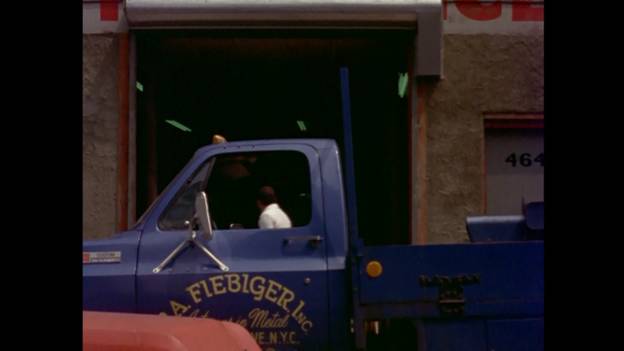
Recently, one of my fellow bloggers (as well as film analyst) talked about the age old gripe that Ozu's cinema is slow. He argues that the slowness felt in Ozu's films is "closer to the grammar of classic film style, the study deliberate quality and the quiet stateliness joining in deep harmony with the themes". While my opinion of Ozu is similar, I would also find other filmmakers that fit well within this comment. One specifically being Chantal Akerman. Having just discovered, and enjoyed, the three-hour, nearly monotonous, Jeanne Dielman, 23 Quai du Commerce, 1080 Bruxelles, I knew that Ackerman's style was polished, detailed, and camera-driven. Meaning, that she relied on the camera to discover the discover the nuances of day to day in the life of Ms. Dielman. News from Home, a pseudo-documentary involving letters from her mother along a backdrop of late 1970s New York City, Akerman again leaves the camera running, at times with nothing more than the people of NYC staring deeply into the lens, and the result is one of the most honest images of a great city, a time capsule for the future, and a true portrait of family.

Beginning in the early hours of the morning, lasting until the sun finally sets, Akerman's camera takes us to all the famous locations, and in a brief 85 minutes provides more emotion, more insight into her life than your average modern documentary.
News from Home
begins with a long, strolling camera shot into the inhabited streets of an overpopulated city. The 1970s images slowly come into frame as the "city that never sleeps" emerges from the unknown accompanied by Akerman reading letters from her mother informing us that she misses her daughter as she has just arrived to this foreign land. As the film progresses, the style doesn't change, Akerman takes the subway, takes us to Times Square, takes us to 5th Avenue, but instead of narrating throughout, merely allows the camera to show us time, date, style, and structure. What would seem like one boring shot after the next, slowly becomes relate-able to the "reality" mind. We cannot help but watch those sitting down on the Metro, those passing by on the streets, our eyes focus in to those living their lives as Akerman merely places her camera directly in f
ront of traffic. Clothing, sounds, cars, marketing, dirt, and trash all compose her image of NYC, and the worry of separating from her family rises to the surface. As Akerman reads her letters, the images coupled with the words, speak further than just an over-manipulative mother always asking when her daughter will return, but the daily flight of anyone leaving the coop for the first time into a bohemian city. Even today, in 2011, the nervousness inside of mother's voice coupled with being lost in a sea of people feel relevant and utterly frightening.

Jen mentioned while watching this slice of history that if she was older during this time in the 70s, she would have traveled to NYC. What makes News from Home more detailed than today's images of New York City is how real this city feels. In modern cinema, NYC is always bright, it is always clean, there is a awe of glamor around every turn, but with Ackerman, the focus is on the truth, and during this time, New York City wasn't pretty. It wasn't like watching episodes of "Sex & the City", but instead trash littered the streets, graffiti was too popular, and the less-glossed truth became clear. It felt tired. It felt used. It felt nowhere close to modern. Akerman captured a habitable city, not the monolith of culture. That is what drew me into this film. Akerman's lingering camera captures everything, and it is impressive to see the honesty that it produces.

A big part of this film are the letters that Akerman reads. As the images of NYC swirl around us, nearly engulfing our attention away from the words brought to us from another place. These letters are important to digest, because it gives us a personal glimpse into Akerman's world, into her family dynamic, and her decision to leave the "nest" and take strides on her own. With infrequency happening between letters, a pressuring mother continually asks why she hasn't returned home yet, combating these dreams with the reality that home life is a mixed bag of joy and heartbreak. As we are granted access into some of her mother's deepest worries and feelings. This adds a full-course of realism to this film. As I watched, I couldn't help but remember the first time I left the house, the quickness of my first letters home only to find months later, as my life eventually took shape, that my letters home became less and less frequent. That is what we watch here, and despite the 1970s time, the realism of what Akerman is doing (documenting her steps into her life), the overall message and what Akerman chose to accomplish was successful. It is a timeless film, and despite the Ozu pacing of this film, there is a point to the length of scenes. It gives us a date between letters (the long the scene we begin to feel Akerman's growth personally) and even without seeing Akerman at all, we are shown her levels of growth. How do you watch a subject grow without showing the subject? Watch News from Home to see this technique in action!

As I wrap my thoughts on this film, I applaud Criterion's sister set, Eclipse, for releasing this obscure title. What would have otherwise fallen into obscurity, finally has a life to breath as others discover this set and the compassionate voice that Akerman defiantly showed in the 70s. Dielman is the voice of femininity, while this is the voice of age and trust. As I watched this film, I couldn't help but wonder if anyone realized who they were being filmed by, and if they even realize they are in an Akerman film. Were they just witnessing another potential film dropout point a camera, or did some of them realize that perhaps they were becoming a part of film history? Watching these ghosts walk by (as many of them are probably dead), it changes the perspective of what our lives look like. News from Home is unlike any documentary that you will watch, and Akerman's artistic style is relevant from the beginning. The choices made, the images shown, the letters read accomplish something very few filmmakers have done, which is give us emotion without a person. Her camera work is outstanding (several images feel like 60s Godard with the colors and realism), and the overall product is amazing.

Akerman has again impressed me, giving this film a green mark with blue stars. I will watch this movie again and definitely suggest it to friends and family. Do not miss this haunting tale of family and uncertainty. Witness the birth of one of our greatest filmmakers. Enjoy, I am off to another Eclipse. This is already shaping up to be a great journey!


Friday, June 10, 2011

Man of the West (1958)


"Man of the West" is not your typical western. Absolutely, it takes place during the times that most western films take place, it has all the markings of a western with the ten gallon hats, the unshaven bad guys, the beautiful Technicolor landscape populated by horses, and why not, there is even a covered wagon. So, but every account this is and should be labeled a western with Gary Cooper. But watching this film, truly viewing what is happening in front of the camera as well as the words from our actors, it quietly, very quietly, transforms into a dark drama with a western background. This is done through various avenues that direction Anthony Mann is not afraid to explore with this genre that rarely likes to go out of the box. With introductions into modern technology, the purest sense of an anti-hero, as well as a fight that borders between the lines of eerily sexual and the foundation for the legendary fight in "They Live", "Man of the West" boldly changes the typical dynamic of a tired genre and produces a film far from perfect, but wildly entertaining to watch from a cinematic standpoint.


To begin, what can you say about Gary Cooper, despite being in other westerns - "High Noon" comes to mind - he just doesn't seem to fit the typical mold for western superhero. He is tall, he is not as gruff around the outsides, and his emotion seems to capture the better of him. When he spews those last minute call lines, those bits of anger for the life that he chose, it never quite has that gruff demeanour about it, instead, it feels like a struggle via the eyes of an everyman. Is Gary Cooper an actor? Can he carry roles? Absolutely. Was the a powerful choice for the internally decommissioned Link Jones? I think Anthony Mann made a brilliant choice for casting Cooper as the lead. He is what pulled me into this film, and while I lean the further direction from westerns, it was because of him that I found myself captivated by the screen. His name changes as he enters the film, the seemingly funny but poignantly true account of him fitting onto a train, and finally the revelation of what hi
s life is like outside the gang added to his mystique. The fight, well, the fight is an entirely different situation that demands its own paragraph, so I will leave it there. Accompanying Cooper are Julie London as a "love interest" (in the vaguest sense of the word) and Lee Cobb as Dock Tobin. London exudes sex as she briskly walks from scene to scene, while Tobin is way over the top as the curmudgeon old villain who is neither drunk nor blind, but acts like both. Yet it feels like our side characters are merely that, sideline characters. Your eyes, the viewers eyes, focus almost entirely on Gary Cooper due to what he brings to this film. His level of humanism brought to the character of a man who loves to kill, but hates the lifestyle (I will argue this point), is brilliant.


The fight. The seemingly elephant in the room when it comes to this film. For nearly five minutes smack dab in the center of this film we are given two fights. The first is between Tobin and the cousin, Claude. This is a peculiar fight because it seems like they are arm wrestling without a table. Like a fight to see who has the firmer handshake, Claude eventually loses and Cooper instigates a duel between him and the emotionally and sexually deprived Coaley. Let us not forget the scene earlier in which he requested that Billie Ellis to remove her clothing, in what became a very awkward scene quickly. This leads to this fight, there are fists thrown, there are tree branches used to disarm, there are horses nearly caught in the cross fire of this battle as innocent bystanders. It is an epic battle, and eventually, when Cooper gets the upper hand, he begins removing Coaley's clothing in reference to what happen to his not-woman earlier. This makes sense, but it is still extremely awkward. As Mann directs, he puts the focus not only on the fight, but also onto the faces of those watching, which eerily reminded me of what I looked like as I viewed. This is a powerful fight. This is a cinematic fight. This is a fight that just goes from strange to even stranger, yet I could not remove my eyes from the screen. When the eventual climax of the scene happens, it pulls you back into reality because, well, they didn't have the budget for a big death. Needless to say, post fight was a let down.


This wraps up my "501 Must See Movies" book and for the first time, I drew the slip for some Eclipse series of films (a subset of the Criterion collection) and I cannot wait to see where in the world I get to travel next. Until then, let me score this film. "Man of the West" was a strong film. There were scenes that I LOVED, the color of the background and the lush, lush Technicolor was perfect. This movie stands at attention. Gary Cooper was a wise chose of a character, and while the ending seemed haphazard at best, the steps to get to that point was fun. I also appreciated how "new" the train system was in this film. Two scenes particularly stand out. One is when Cooper isn't comfortable on the train and cannot understand the logic of why people prefer that way to travel. The second is when Tobin talks about taking a covered wagon as if it is 1,000 years old. It is the details of this film that make it more than your average western, but I cannot give it that almighty green. I liked it, but I don't think I could watch it again. I could easily suggest it, and if it were on at a party I would not complain, but pink is where I stand.

Great job Gary Cooper. Amazing choices Anthony Mann!

Monday, June 6, 2011

The Man in the White Suit (1951)

How to remain clean in an all-too dirty world?

"The Man in the White Suit" takes its 1950s world and opens its doors into today's modern society. With ideas blossoming daily by young entrepreneurs, and ultimately being purchased or "gobbled up" by bigger business, this film released in 1951 feels more adept today then perhaps it did upon its initial run. With industry standards like the Kindle or the Nook, reaching to greater heights, one cannot help but wonder which company will finally stand victorious. Which big business will emerge with the larger wallet to ensure product safety? If one cannot answer that question, perhaps a viewing of this film will tighten the bootstraps. "The Man in the White Suit" is part comedy, part social economic commentary, and part imagination. IMDb uses the phrase sci-fi to promote this film, but they couldn't be utterly wrong. There is a complacent element of science within this film, but overall it is the story of a small man with brains being downtrodden by big business.

Watching Alec Guinness stumble from factory to factory, draining funds from each department, to merely fuel his idea on creating a fabric that could never be destroyed, could never get dirty, and would never need replaced, is funny. This is an economic film with comedy wrapped tightly around it, there is no doubt about it, and Guinness at the top of his game. One could reasonably argue that everyone involved with this film was reaching their potential. There is a scene where director Alexander Mackendrick merely shows this device in one place to another, letting us know that Guinness has made his mark on this plant already. Instantly, this feature transforms into a dystopian world where humans would only have one piece of clothing, where dry cleaners would slowly not exist, and those without the cash to produce would ultimately become rubble. The new world would literally embrace the phrase, "One should always have one good suit". The film becomes eerily, and surprisingly darker as the head honchos of each of these fabric factories fights, literally, over who will control the rights to this idea. Like witnessing a British version of "Shark Tank", the old men with money attempt to take Guinness' idea from him and slowly keep it from the world. Guinness runs, but can you really run from ultimate economics?


There is a love story within the mix of this film, it is light - nearly unnecessary, but helps build some character into Guinness. This is his complete ride. The visual of him running through the streets of London with this impermeable white suit on was both brooding and hilarious at the same time. Mackendrick, known for the quick-talking, powerhouse of a film "Sweet Smell of Success" is able to balance the anti-capitalism remarks and the early Peter Sellers-esque antics of Guinness very tight. This is a quick film, running at nearly 85 minutes (I think shorter), it doesn't bumble on itself during the course of time. There is a story, it continues with it, and grows the horrors of small business at the same time. This is a powerful film merely due to its simplistic nature. The special effects are mediocre, the story is amazing, and Guinness is top hen of the hen house with his portrayal of Sidney Stratton. Despite that Mackendrick did also direct "The Ladykillers", a much more morbid slice of comedy, "The Man in the White Suit" (even with its darkness) feels almost whimsical. One can easily follow Guinness from factory to factory without a care in the world. His likability as well as detailed character development of Stratton creates a stronger viewing experience. "The Man in the White Suit" is a film that can be viewed again and again and again, discovering more about it during each viewing.


If you can't tell, this was a cinematic highlight during my week. I loved Guinness in this role, and he provided just enough social commentary with comedy to allow the brain to function at a higher level. The characters are spooky (when they need to be), the explosions are detailed, and the story knows what it wants to accomplish and does just that. To the untrained eye, Guinness could have easily been Sellers' understudy. This is a highly recommended film, enjoyable for both adults and children. Never have I watched a film and wanted something so badly (well, maybe never say never), but that white suit looked amazing! Found in my "501 Must-See Movies", this is getting a green highlight with blue stars. I cannot wait to watch this film again and add it to the Cinema Underground collection.

Friday, May 27, 2011

A Man of All Seasons (1966)


Like these figures coming out of the fog, one must be timid on how to approach the film A Man for All Seasons. Do not jump into the unknown, but instead be prepared for the unknown that could present itself on the other side. With full exuberance I jumped into this film without hesitation and without appreciation for the sheer power that this aged piece of cinema could bring. A Man for All Seasons is an Oscar award winning film, it currently has a rating of 8.0 on IMDB.com [as of 5/27/11], and plenty of positive reviews to keep this film floating on the DVD circuit or eventual blu ray for years to come, and quite frankly, perhaps I will rediscover this film later on in life, but for now - after finally completing this nearly two-hour behemoth - A Man for All Seasons felt shallow, underwhelming, and certainly not worthy of the accolades that it has found throughout the years. Absolutely it is grandiose, and one cannot complain about the subject matter, and for those looking for their Orson Welles fix, this film will provide it. BUT, this is not a film that can sustain itself. Taking away from the credit that is due to Alfie or Who's Afraid of Virginia Woolf? this film just doesn't push the boundaries of film making like the other entries this year were able to do. It is disappointing to see films lauded in their time, but falling flat on their faces today. This, my friends, is the tale of A Man for All Seasons.
To begin, what can a viewer be proud of with this film? The costumes and ability to build such a large period film is standing-ovation impressive. The visuals will not send your eyes away hungry. Welles' attention to the detail of his character only shows how impressed he was with the story itself. Yet, that is all I can applaud. Watching this film, in fact, re-watching this film, sometimes scene by scene, I found myself asking the question - what did I miss? Why wasn't I being pulled further within the conflict of religion vs. politics? Why wasn't I applauding the dedication of Thomas More to his plight? As I squandered these questions, the question that inevitably came through was, "What type of movie was this?" A Man for All Seasons has no action sequences, has no direct love interests, and honestly no real humor or moments of dread. This film falls into the distraught world of being merely a true slice of recreated history. The scenery will tell you that it is true, but to the unread mind, one must merely take this as truth. Where was the music? Where was the intensity of More's life? Why did this film completely and utterly bore me nearly to death?

I am not a man who desires a big spectacle of Hollywood-ism when I sit down to watch my films, in fact, the less at times seems to capture me further into the plot, but with A Man for All Seasons it felt like I had seen this beautiful cake, only to take my first bite and it to be stale. Paul Scofield's portrayal of Thomas More should have been the crux to the film, allowing every eye to focus on his detailed nuance, but in the end, it just felt tired. I could not see the character he was attempting towards, and I could not see any dramatics behind his eyes. He was a place mat, a mere "somebody: to hold the door for the other actors that needed the work. How could he have beat Michael Caine or Richard Burton? It just doesn't make sense. This was a filmed play, nothing original or exciting about it - yet those within the blogs are using headlines like, "Best Film Ever". Did I miss something? Even the always valuable John Hurt was under served in this film, hiding behind the weaker Scofield character, and missing a fuller opportunity to shine.

While I argue that it was the acting that sent this unmanned vehicle plummeting to the sea, one must also consider the direction. This was a very bland film, despite the other options recognized that year, one must see that the camera provided no further inside into this world. It stayed still, the eye was focused on merely one character at a time, and when one walked it walked safely behind. Perhaps "safely" is too kind, the camera remained uninspiring and unoriginal as it focused on the lesser, menial moments of this film. Take a look at the basics behind this ten-minute long scene above, where Scofield walks the room without any excitment, compassion, or character - while our camera focus' us on what will happen next. The camera, in A Man of All Seasons becomes the biggest spoiler of the two hours, allowing no imagination to follow and less focused direction. There was hope early, but it just fizzed as the two hours progressed. As I attempt to put my finger on which point I completely lost interest [probably around the 23:15 mark], I continued to keep hoping that something, honestly anything, would change the perspective, but again with lacking directing, non-creative camera focus, and just a bland hope from all characters, this film quickly began a transform into mush. Despite the accolades, it just fell short.

As you may or may not guess already, I really had higher hopes for A Man for All Seasons, but sadly it just failed, and it failed hard. Sure, these images look beautiful, but substance is also needed behind the camera, and this film was utterly lacking. For those fans of Orson Welles, it is worth a few glances over the shoulder, but overall, it was painful to watch. Found in my "501 Must-See Movies", this was obviously not a "must see". This is not going to be pretty, but it gets a yellow highlight with black mark, not to be watched again (perhaps, I should say, unless a Blu of this hits, then I may - MAY - force myself back into it) Ranking along the lines of the Road Warrior I just forced myself through, this feels troublesome due to the lacking excitement. It is films like this that I wish I was part of the Academy in 1966, so that a better outcome could have been determined. How did this film happen?

Sunday, May 15, 2011

Mad Max 2: The Road Warrior (1981)

Mad Max is a lost soul. Through the tedious and perilous journey of the first film, Max survived a dystopian future by fighting automobile villains and dusty roads, but ultimately losing his family. It was an emotional journey, one filled with pitfalls coupled with Gibson demonstrating his acting ability to the screen for the first time. While not the greatest film of all time, there was some ingenuity to the car crashed, the desolate landscape, the Gibson’s personal philosophies. While the film itself hovered around mediocrity, there was some creativity and originality that found bonus points. With Mad Max 2: The Road Warrior (sometimes merely called The Road Warrior) none of that originality or emotional characterization came forth. Considered by many as the true “first” Mad Max film (and in some circles the better of the three), this film falls prey to the rinse, wash, and repeat Hollywood spin cycle. With plenty of crashes, no emotion, less development of side characters, a villain that felt more like Casey Jones instead of a genuine baddie, and a story that seemed lacking in anything exciting, The Road Warrior fell. It fell hard.

What should have been a simple sit down to view an iconic moment of cinematic history, in reality transformed into a full week torture-fest. Picking up where the last film concluded, The Road Warrior provides a very quiet opening, with merely explosions and punk skater dog-soldiers screaming into the air. The scenes are set to bring chaos back into Max’s life, but where Road Warrior crumbles is the penultimate question, “Why?” Why does Max care? Is fuel, an unemotional attachment, his only reason for assisting these survivors whom seem to be doing well themselves and have been for quite some time? Transforming a film whose original genre was a bleak view of human existence and personal Australian sentiment into a full-fledged no-holds barred action film proves a disservice to the original film. Max becomes a paper thin character, fueled (no pun intended) by a need to get more energy and slightly pushed by the wild hair of a boomerang boy. Frustration emerges as this film provides no new platform for Max to evolve as a character. As an audience, we are given a further glimpse of this destroyed planet, but nothing that pushes Max beyond the boundary set in the original film. We know he can drive, we know he can fight, but who/what pushes this man? In this reviewer’s opinion, having just spent a week trying to discover the “why” and “what” of Road Warrior, the answer cannot be found.


Disappointingly we are not even pulled into the original film. Where is Max’s memory of his family? Where are the scenes of an internal struggle between the reality of his existence and any current dreams? Road Warrior felt both rushed and disjointed by having too many villains, too many instant connections, and too many “heroes”. The Gyro Captain, the Casey Jones-esque guy merely called Humungus, the red-Mohawk biker, the kid with wild hair, the semi-love interested that floundered, and so forth. This was a film of ideas that were nowhere near final development. This is a sequel; it has the same character from the original, BUT not the same character from the original. This was not the “Mad Max” that we were originally introduced to, and that becomes a big fault to this film. Why build this emotional character only to ignore it the second time out and replace a true apocalyptic drama with nothing more than explosions, fire, and the occasional boob shot. It felt like a cheap knock off, instead of a true addition to the Mad Max world.

Overall, I wasn’t happy with this film. Found in my “501 Must-See Movies”, Mad Max: The Road Warrior disappointed me further than the original did. I was prepared to fully enjoy this entire series (not having seen Thunderdome yet), but they just fell flat. It was like watching, what did happen in many-a 80s action film where character development fell to the wayside and was replaced with the wham-bam-thank-you-ma’am action. If you don’t believe me, see the original Rambo vs. the rest released. Watching this “sequel”, I just kept waiting for something to tie me back to the original film, but no luck. Yes, The Road Warrior could stand alone, but did we want it to? Was there a small part of me that hoped that Humungus would take me back to the original? Absolutely. Perhaps my hopes were too high for this film, but with the amassed critical praise, it did not deliver. Mel Gibson solidified himself as an action star when it could have been something more. Yellow highlight with a mark. Much less excited then when I finished the original. Horrible.