Monday, October 17, 2011
Edith and Marcel (1983)
To begin, this was not La Vie en Rose, and for those walking into this 1983 French film expecting the Marion Cotillard Edith Piaf will be sorely disapointed. That is not to say this is not a good film, it has highlights like any good film does, but it is not the same as the 2007 biopic. Claude Lelouch, who brought us the 1966 feature A Man and A Woman, tried to show the beauty, the emotion, and the unadulterated love between Edith Piaf and Marcel Cerdan, but instead followed-through with a bumbling afterthought which included a non-expressive second story, "Gone with the Wind", lip synching, and a two and a half hour film which could have easily been a mere 80-minutes and still found its voice. This was one of those films for me that I jumped in expecting a slow-moving French biography, instead discovered that I enjoyed the pacing of the first half, only to witness Lelouch's inability to control the "grasping-at-straws" parallel stories at the same time. Where one should have suffered, he kept them both alive throughout - and they both failed. Miserably.
I hate to be the one to knock this film, but I have to look at it as the sum of its parts. First, Edith Piaf was a phenomenal singer, history has proven that, but to squander her voice by having Evelyne Bouix lip-synch her songs just felt like a cheap, Vegas side-show. Yet, Lelouch bought back brownie points by not making her the center of attention. Her songs were the central focus of this film, the words, the melody, the sheer forced expression that Bouix brought to this famed persona, were all a part of Piaf's world, and Lelouch knew this by making her songs play on the radio, on a record in the background as life continued to coexist. Then, as if he knew he had to bring both the good eggs home along with the rotten ones, he decided that he would dedicate half the film to this unemotional love that takes place between a unkempt soldier and a student who discovers the power of the written word (and her deep annoying love for "Gone with the Wind"). This is one of those parts that felt like it would work on paper - seeing the two stories gel together to show how Piaf's music both touched her life as well as the lives of everyone in Franch - again, seemed like an idea that would allow Lelouch to discover his directing ability. But the problem becomes this doesn't, and will not, translate onto the screen. Instead, what Lelouch creates is a jumbled, mess of a film that had too much story and not enough development. By the middle of the film, I just didn't care. I didn't care about the music, I didn't care about the characters, and when the sudden love between Marcel and Edith happens, I just didn't know them enough to follow-through the rest of this film (no chemistry, no defining love moment). As our second story begins to dissolve under the pressures of Piaf and Cerdan, Lelouch seems to recognize the failing story and jumps headfirst into Piaf's story - which felt like we needed a narrator stating, "...we now return you to your regular story, which is already in progress..." Mentioned before that this film would work, in fact it could have been a movie that demonstrated originality in the biography genre of film, but instead - like the cinematic horse pill - it became too hard to swallow. The parts were too weak, creating a mixed film with overall bad parts.
I will give Edith and Marcel one very strong credit, Lelouch and co. were not afraid to mention other great films as the backdrop of the time. For example, when our soldiers are sitting around one night they mention that they feel like The Grand Illusion, while coincidentally I was feeling the same thing. Lelouch drew from other directors to imitate their scenes, but I just cannot support this film. While I thought there were one to two decent parts, overall there were just too many bad parts to count. I couldn't wait for this film to be over. Could we never learn that lip synching is never an option?
Here is what "my man Elliot Wilhelm from "Videohound's World Cinema: The Adventurer's Guide to Movie Watching" had to say:
Too reverential, too dull, and too long. Claude Lelouch must have embarked on this project as if it were some kind of historical biopic about founding fathers who were never actually alive - just mythological. Chanteuse Edith Piaf and boxer Marcel Cerdan were both French national treasures, of course, but just because they got together, do they have to be turned into waxworks - Raging Stiffs? And why did they get together? We don't have a clue (see: parts), but Francis Lai's sticky musical score insistently tries - and fails - to fill in the Grand Canyon - like storytelling gaps. Evelyne Bouix lip-synchs to Piaf recordings of "Ma Vie en Rose", while Cerdan's kid, Marcel Jr. (who unfortunately got talked into playing his old man in this dog) jumps rope and punches his punching bag, waiting for his title shot. In the French version, it takes two-and-a-half hours until the tragic finish. The best thing about the American prints is that they're almost an hour shorter. Nice costumes.
Mark: Surprisingly, a pink mark. I cannot hate this film, but the straws are so flimsy that I just get milk all over me. I will not watch this again, nor recommend to friends, but it was neat to see the direction Lelouch attempted to go. Originality was a thought executioned poorly.
Tuesday, October 11, 2011
L'Eclisse (1962)
Capturing a woman struggling with her inner-emotions is difficult to capture on film. As a book, one could easily read the inner monologue that our ill-fated protagonist provides, giving the audience a chance to full develop the character in our minds. With film, that opportunity is not there. It relies heavily on both our director as well as whomever is chosen to lead us into the two-plus hour path of self-familiarity. It can be produced poorly (see Jarmusch's Dead Man) or it can be done brilliantly (see the more recent Malick film Tree of Life), but again it relies heavily on the connection between the director and the actor. L'Eclisse falls somewhere in the "grey zone". Directed by Michelangelo Antonioni (my only other exploration with him was the oddity Zabriskie Point) this detailed story about a woman breaking up with her boyfriend, the chaos of modern Italy in the 1960s, and the nationalistic tear between materialistic vs. idealistic is powerful, there is no doubt there. But where Antonioni lacks in focus, he makes up for it in detail. Amateur cinema enthusiasts may find L'Eclisse a bit slow at times, allowing for the more mature viewer to witness Antonioni's depth and control of each frame. It is within each shot that our story develops. Take, for example, those powerful scenes within the Italian Stock Exchange (seemingly more powerful today then when released in 1962), it is within the chaos of those scenes that we see a materialistic Italy born. From housewives to young men, the floor is rampant with those ready (is that the right word?) to win big and lose even bigger. We see the rise and decline of wealth in the same scene, and greed is those little slips of paper being passed around. An archaic Wall Street; the foundation of our future.
Yet, it is these scenes that elongate our feature. It takes it from commercial success to powerful art house foreign drama. This is a beautiful film, with scenes that just stand proud at every edit. One in particular that remains in my mind is when Vittoria (played by the "easy-on-the-eyes" Monica Vitti) stands at a building, looking, thinking, pondering the life ahead, and as she turns (in one quick shot) she watches a horse and buggy go by, only to be juxtaposed by an image of Mr. Material himself, her current flame, Piero (played by the Criterion-loved Alain Delon). Smooth. Simple. Antonioni understood each moment, and despite this not being for mass appeal, the truths behind this feature play to today's audiences. At times, it is difficult to understand what Vittoria wants, and perhaps it is because she fully does not understand what she is looking for, but Antonioni doesn't force it on us. All of this culminates to this very lazy ending (using the word "lazy" in a positive way) that shouldn't surprise. Here are two characters so developed within themselves, that when a moment of truth arrives - they are stronger running away than towards.
Enjoy this film for the stark emptiness that it oozes. Watch this film for the unbundled chemistry between two nonchalant lovers. Observe the history that Antonioni has captured with words like "PEACE IS WEAK" and the facist control. You will not find a fast paced rom-com in anyway, but instead discover an Antonioni passion work, dedicated to the visuals and feel of Rome during this time. In short, a positive release by the Criterion collection.
Review from Eliot Wilhelm from Videohound's World Cinema: The Adventurer's Guide to Movie Watching:
Deciding that they have nothing more to say to each other, lovers Vittoria (Monica Vitti) and Riccardo (Francisco Rabal) break off their affair; before long, Vittoria becomes involved with a swaggering young stockbroker named Piero (Alain Delon) who is working for her mother. The final chapter of the Michelangelo Antonioni trilogy that began with L'Avventura and continued with La Notte carries the director's concerns about the individual's sense of alienation in modern society to their logical extremes. The famous final sequence of the film doesn't even show us any human beings at all -- just the location where we expect them to be and the space the surrounds them. Where such images in an Ozu film would indicate a world in balance with the characters about to enter the frame, the same images in L'Eclisse imply a world in which human actions are no longer effectual -- the landscape is the same, with or without people. It's a view of man's fate that's as bleak as they come, but expressed by an artist of extraordinary talent. If you've seen the first two films in this cycle, you may feel you've gone down this road far enough. Depending on your appetite for the director's world view, L'Eclisse will either be the most uncompromising -- or the most superfluous -- of Antonioni's major works.
Mark: Green highlight with blue stars. Needs, nay, Will be seen again.
Monday, September 19, 2011
Earth (1930)

In the introduction to this film, Kino inserts their opportunity to give a small history to this film, specifically the time period as well as the turmoil the director, Aleksandr Dovzhenko, had endure to merely get this film made. It provides a nice introduction, but not enough to fully develop the story Dovzhenko originally planned. This is a political film. This is a social film. This is a dated film. That is not to say that I am against, or have trouble with, silent film. Eisenstein and von Sternberg are two of my ultimate early filmmakers, but oddly I had trouble with Earth, Doyzhenko's 1930s silent film about collective farming. It isn't that the shots are not beautiful, his eye alone is worth the 75 minutes, but where I just struggled with this film was two-fold. Kino's choice of music - albeit perhaps original - just didn't seem to match accordingly to the scenes as the progressed. While the transfer itself is not a worry of mine (Kino is always a hodgepodge of good or bad depending on the week), I do feel specifically with this film we were missing something in the translation. Words would be loose, images would come and go without any rhyme or reason, and our characters would ultimately end up like stale bread without the crusts. Again, beautiful shots - but perhaps a bit too overwhelming of a mission to endure with a film with such a bold thesis statement. For years, this singular film was on several top ten lists, ranking among the best from Russia, but I just don't see it. These characters were laughing off-screen, and I cannot be persuaded that they were doing that for the story. Currently, as I type this review - watching the film for a second time to be sure I didn't miss anything - I just witnessed this beautifully developed scene with a man and a woman holding each other, only to be followed by a scene of a man "walking"/"dancing" home for nearly five minutes. It is this false juxtaposition that dates this film horribly. I wanted to be involved, I wanted to witness a Russian Birth of a Nation, but all I ended up with what one mixed (nay, underdeveloped) message after the next. It just didn't work - and it sadly felt like a 1930s film. Is it my taste or did I completely misunderstand this film? The world may never know.


Still moving along my book entitled Videohound's World Cinema: The Adventurer's Guide to Movie Watching by Elliot Wilhelm. Here is what he had to say about Earth."I wanted to show the state of a Ukrainian village in 1929," wrote director Alexander Dovzhenko in 1930 of his masterpiece, Earth, "that is to say, at the time it was going through an economic transformation and a mental change in the masses." The change that the great director portrays is the struggle to establish a collective farm program in the face of the murderous old-line landowners, the kulaks. But through this struggle forms the spine of Earth's plot at its most conventional level, Dovzhenko's film is far more than a sophisticated piece of advocacy drama. Earth bits of a great deal; it attempts to be nothing less than a poetic cinematic tribute to the cyclical glory of nature, as seen through the eyes of those who tend to and love the land. The complete, stunning success of Dovzhenko's film is all the more staggering when you consider the immensity of its goal. It is capable, even 70 years after its creation, of making one marvel anew at the majesty and logic of the natural world, as well as producing the sheer elation that comes with rediscovering - with all the force of a tidal wave - the primal, incomparable power of cinema. Correctly voted one of the ten greatest films of all time by more than one international panel of film critics".
It is ok to disagree sometimes. I just didn't have the same love as Mr. Wilhelm had for this film. The problem is, I know that I am going to see this film again in many of my books. Not going to leave Earth behind. Maybe I will pick it up again - but this time in my life, it just didn't speak the wonders that I feel everyone else saw.
Mark: Yellow highlight with black mark. Not positive.
Friday, September 16, 2011
The Earrings of Madame de... (1953)
Oh yes, the Paul Thomas Anderson introduction is well worth the price of the disc alone. Like many firsts in my life, this was my very first (and after this film, nae my last) introduction to the cinematic triumph of director Max Ophuls. As I continue my journey into unknown, sometimes great sometimes poor, cinema it is hurdles like this that make this project so much easier. A creative story involving an unknown "Madame", a set of earrings that travelled the world, and a sick love ending in violence. If this was not what you were expecting to read when you saw this film post, do not be surprised. I was ill prepared as well. Thinking this was about to be another entry into the world of dry, French cinema, I was amazed by the beauty of each scene, the types of characters that were presented, and the overall message of the story. It is about coincidences, about life-fates, and ultimately about finding love too late in life. The Earrings of Madame de... is also incredibly evil in its relationship between our trio of "star-crossed" lovers. The General knows what is happening, he is not dumb, yet allows his wife to at times walk all over him. His wife, the ill-fated "Madame" (whose name we never know in an ominous way), who faints at any sign of trouble or doesn't get her way. Her character is the most peculiar because in one scene she is wiping her debts, in another she is cleansing the soul. I believe the General had a structure to his women. Then finally, it was good to see infamous director Vittorio de Sica sink his teeth into a role that required him to be more suave then he could possibly be in real life. That man was good, and no General was going to stand in his way. He had a pair of balls on him that modern society would be proud of. Who else walks into his mistresses house and doesn't get nervous about meeting her husband. Impressive. Finally, I was happy with the ending. It was a bold statement and brought us full circle with those pesky pieces of jewelry that brought us into the whole mess. My ultimate question with this film was if life goes like this, when will I ever see this M.U.S.C.L.E. figure I sold when I was a kid. It is surely taking quite a while to get back to me. This was a fantastic film with amazing characters. Beautiful transfer from Criterion. Not the film I thought it was going to be...


From the book Videohound's World Cinema: The Adventurer's Guide to Movie Watching written by Elliot Wilhelm:
"Narcissistic and spoiled, Madame de... (Danielle Darrieux) lives in ostentatious comfort with her military husband (Charles Boyer); she's so accepting of their unemotional marital arrangement - and their separate bedrooms - that she's unashamed to pawn for a little extra cash the earrings her husband gave her. But when the same earrings find their way back to her by way of her new lover, the dashing Baron Donati (Vittorio De Sica), her desire now to keep them as precious symbols of his love drives this dizzyingly romantic, heartbreaking masterpiece to its inevitable, tragic conclusion. The physical perfection and ingeniously symmetrical structure Max Ophuls' The Earrings of Madame de...is easy to see; its surface glitters with the opulent palaces and opera houses of long-ago Paris, and the ceaseless, fluid camera movement plunges the viewer headlong into her vertiginous romantic plunge. Yet that surface is only an elegant means of transportation into the romantic world that Ophuls ruled; his famous tracking shots and swirling images were like the mirrors in a Cocteau film, on the other side of which existed a world of dreams vastly more real and effecting than our own. The power of Madame de... is achieved by Ophuls' alchemy - a confluence of form and truth that is, to say the least, vastly more wrenching than the sum of its parts. There are a dozen or so films - not exactly twelve, perhaps, but hardly a huge number by any measure - that I consistently believe to be THE best movie I've ever seen, every time I see it. That Madame de...is among that number each time I see it remains rapturous proof to me that despite frequent suspicions to the contrary, my lifetime in the dark has not been entirely misspent."
Visit our boys HERE if you want to own a copy of the film.
Mark: Blue Stars with Green highlight. I will watch this film again.
Tuesday, September 6, 2011
No Regrets for Our Youth (1946)
World War II ends, and Akira Kurosawa picks up his camera once again to give us a story that pre-dates Seven Samurai and Ran, that develops a bit stronger than Throne of Blood or Red Beard, but probably stands as his most passionate film until his 1990 release of Dreams. It is an unsung film with no official DVD release in the US up until Criterion's box set labeling it "Post-War Kurosawa", and a mere VHS to tie over those Kurosawa completionists. Like many Kurosawa films, this is not for the fly-by-night film watcher, but instead a dedicated picture to the culture of facism, the role of women in society, and the fate of Japan between the dates of 1933 to 1945. It begins very slow and very youthful, with a swallow of University students galloping through the land, singing, laughing, being playful, and as we see the clear blue sky of Japan (or in this case, the clear black & white sky) near the edge of the screen, it is quickly pulled from our fingers as a wounded soldier as well as gunshots in the distance are introduced. We are then pulled deeper into history. Guided by Kurosawa's only female lead in his catelog, Yumie (played with unbridaled perfection by Setsuko Hara), moves from a literal lifestyle of playing the piano for freedom, to plowing the fields of justice. It is a small part love story, small story of independent thought, small story of loyalty, and a small part family drama - but as a whole, it creates No Regrets for Our Youth. Again, a difficult film to watch, merely because it takes Kurosawa a least 45-minutes to full detail his direction for our characters, but once you see Yumie's soul - it becomes one of the strongest films in his catelog. The final 20-minutes will pull at your heartstrings, and to see him bring Yumie back to the beginning, seeing the changed/unchanged nature of Japan post-war, is brilliant. Stick with this one until the end, depsite the dry season known as the beginning, to watch Yumie plant the rice patties at the end, fighting sickness and destroyed piano hands - it is worth it every time.


A new element to my reviews (as I am discovering I have less and less time for this site, but don't want to see it die out), it is going to be the quote [long or short] on the referring book or site that lead me to this film. First my paragraph thought, then what pulled me into this - then my final review. Let's see how this one holds up:From Criterion Collection website written by Michael Koresky
"As Japan was coming out of World War II, Akira Kurosawa was coming into his own as a filmmaker. And this was hardly a coincidence: though he had made a name for himself as a promising popular craftsman at Toho Studios during the war, Kurosawa later said he didn’t feel he could express himself as an artist until the censorship restrictions of that era had been lifted and he could take the new Japan as his subject. Devastated by the human and material losses of the war and facing widespread homelessness and economic collapse, the now Allied-occupied Japan became the canvas on which this trained painter would make his mark as a filmmaker.
For Kurosawa, social commitment and visual artistry would always go hand in hand, although this particular phase of his career, from right after the war until the mid-fifties, would see him tackling more directly the pressing issues of contemporary Japanese life than ever again. In between 1946’s No Regrets for Our Youth and 1955’s I Live in Fear, Kurosawa would become an international sensation, all the while creating a body of work that dealt, either straight-forwardly or through metaphor, with the struggles of his fellow citizens.
All of Kurosawa’s wartime films were affected by censorship, no matter the content—from personal projects like his masterful debut, Sanshiro Sugata (1943), a classically heroic master-pupil narrative, to assignments such as the overt propaganda film The Most Beautiful (1944), about women helping the war effort. Postwar American occupying forces had their own review board, of course, but its far-less-restrictive guidelines, encouraging the glorification of democracy and freedom, were much more suited to Kurosawa’s political ideas. His first postwar project for Toho was indeed a great fit in this regard: a narrative of national collapse and recovery, No Regrets for Our Youth is a sweeping tale of antinationalist revolt whose central quote, “there is sacrifice in the struggle for freedom,” becomes its guiding principle.
Opening idyllically, with a joyous band of college students whistling along a riverbank as they climb a hill that overlooks Kyoto University, the “garden of freedom,” No Regrets for Our Youth stands out among Kurosawa’s films of the period in beginning before the devastations of war—in the peace and prosperity of early 1930s Japan. And alone in Kurosawa’s body of work, this film aligns itself with the point of view of a female protagonist: Yukie, played by the brilliantly expressive Setsuko Hara. Moving from bourgeois complacency to social activism, Yukie—the daughter of a conservative university professor and eventual wife of one of his students, an anti-imperial intellectual from a peasant family—is the film’s emotional anchor, guiding us through the political and cultural turmoil of Japan from 1933 to 1945.
No Regrets for Our Youth was shot during a series of workers’ strikes at Toho, at a time when the left was resurgent in Japan. And the film’s glorification of radical activism and peasant workers (with low-angle shots evocative of the socialist realism of Alexander Dovzhenko) reflects both Kurosawa’s political spirit and Japan’s newfound social freedom—a multifaceted concept that Kurosawa would continue to examine in the decade to come."
Mark: Pink highlight (good, but not the greatest)
Monday, August 29, 2011
Nobody's Children (1952)
Blockbuster Drama for your Mama-Mia
Who is Raffaello Matarazzo? A question I would have found myself floundering on prior to watching his 1952 blockbuster, Nobody’s Children. In fact, looking through the lacking pages of Google and IMDb.com, one could say that I would not be the only one lacking immediate information at your fingertips. Outside of the quintessential filmography lists and the short essays that the Criterion Collection has released as promotion for Matarazzo’s Eclipse collection, there is little to learn about this maestro of Italian cinema, specifically his contribution to the melodrama genre. As Americans flocked to witness the avant-garde from Italian’s now-dubbed neo-realism movement (specifically Umberto D. – as well as others by directors like Rossellini and Visconti), Italians were flocking in masses to watch a different slice of cinema; specifically the melodrama. Like what we currently consider the modern soap opera (or “daytime stories” for the stay-at-home-mom) these were full of overly-acted characters, big-nearly implausible events, and a pitfall plaguing everyone at all turns. Though this sounds depressing, the Italian audiences ate it up and Nobody’s Children became a blockbuster. Demonstrating the sheer influence of modern cinema, Matarazzo realized that he had the potential for more and three years later a subsequent sequel was spawned (see the last film in the Eclipse collection - The White Angel). Yet unlike American blockbusters, one would have difficulty discovering Matarazzo’s work or visually understanding the mass appeal of the Italian melodrama. Despite the box-office bucks, this lesser known director’s body of work went “missing” for decades. Thanks to the Criterion Collection, it has resurfaced for new fans and Italian cinephiles alike.
Nobody’s Children is dark. Perhaps it is too early to say that for those reading this blog for the first time. Let me put it in a different light, Nobody’s Children is not the most optimistic view of the world, specifically in this small corner inhabited by Yvonne Sanson and Amedeo Nazzari. From a foreman that wants nothing more than to swindle his employer out of money and keep morale low, to a fire that destroys the dreams of a dog, all the way to a quarry explosion that ends in a depressing climactic conclusion, Nobody’s Children begins well below the bar and continues to drop in emotion as the minutes grow. Watching Matarazzo felt like my first experience with Requiem for a Dream or Kids, with dark undertones and deeply rooted causation results. Events happened, and due to those character choices, further events took us down the quickening rabbit hole. Like your American soap operas, Matarazzo sets up scenes which force his characters to claw their way out. After the admirably do this, he does nothing more than drop the floor out from under them. Take the idea that true love between Sanson and Nazzari is being demolished by an overbearing mother. Just when Nazzari believes he has a way to bring his mother to his side by bringing the company into the new millennium, she pulls him in deeper by crushing the words being sent to Sanson. This small event eventually spirals into a never-ending struggle to breathe. From believing that his true love had died, to discovering that she is pregnant, to thinking that the baby has died, to falling in love all over again, to a final big surprise by the end – Matarazzo keeps the melodrama in check as he proves that life’s pitfalls continually send you in the wrong direction.
Despite glaring arguments that our actors did a horrible job in containing the melodramatic nature of their characters, I actually thought this was a passionate depiction of life without the Hollywood roses. What impressed me about this film was that the quintessential “happy” ending wasn’t needed to convey the point. What impressed me about this film was, despite how sorrow-filled this film was, it still packed the theaters enough to constitute a sequel. American Hollywood may be able to learn a thing or two about cinema from Matarazzo – as long as it depicts “true” life – then audiences will approve. But, is that why we go to the theater? Matarazzo seemed to abhor “escapism” as we direly desire with the new influx of superhero films and constant uprooting of the horror genre. Could Final Destination 5-000 learn a little something from Matarazzo? The world may never know – but they will appreciate the work of one Raffaello Matarazzo.
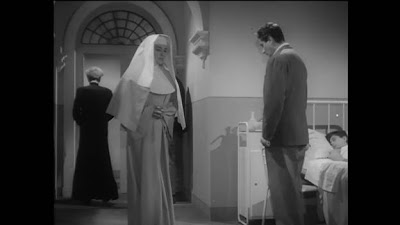
Found as one of my five Eclipse films, this was another great adventure. Everything from the scope of the film, to the acting, to the clear lack of the unknown – what was going to happen next – kept me guessing until the very end and overly eager to see the sequel. Like the other Eclipse sets, I cannot wait to see what else is in store with Matarazzo’s work – and I am excited to know that I have seen at least one of this maestro’s films. A green highlight with blue star. This was an impressive discovery.
FILM CLUB #171 too. 
Sunday, July 3, 2011
No Blood Relation (1932)
As I delve further into the world of the Eclipse (a subset of the Criterion Collection), my eyes are opened to the film possibilities not offered by America's rich history, or at least the opportunity to see cinema from another world view. As I appreciate (at times) what the US of A has to offer, it is what I have missed in generations past that continues to expand the film horizon. Last film outing involved a woman from Brussels reading letters from her mother along the backdrop of 1970s New York City. Despite how it sounds, this film was a brilliant painting of the unknown, coupled with an over-bearing parent. The resonating voice still speaks today, and now, after that unfamiliar story, I continued into the world of Japanese director Mikio Naruse. Unfamiliar with any of his work as well as the entire universe of silent Japanese cinema, I pushed forward. My first introduction to both man and project was a film entitled, No Blood Relation, a captivating story about a birth mother wanting to connect with her daughter and a step-mother not willing to just forget. With no sound at all (lacking music of any variety), No Blood Relation will entertain, bring emotion forward, and demonstrate what a director with lacking technology can do in the 1930s.
No Blood Relation begins with a robbery. A man running down the street, the words "Purse Snatcher", chasing directly after him, is caught by another man and forced by the community to strip to prove his innocence. Using deft comedy and unfamiliar censorship, he is proven not-guilty as he walks away, only to discover the man who caught him was in on the scheme as well. The duo, walking the docks, talks about how they have a bigger con ready to release onto the world, all they need is the film actress Tamae Kiyuka. As we learn about her immense wealth due to the movies, we are also privy to another story building, the story of a man ready to declare bankruptcy and put his family to shame. In this mix, is a mother who does not want to be poor and a young girl caught in the middle. This young girl is Taemae's child, who she gave up to pursue her acting career, now seven years later, she is back, and wants her daughter to be with her. It is a classic story, one that we can still see today with our modern cinema, but what makes Naruse's tale a bit more powerful is a combination of both detailed acting, lacking sound (which surprisingly works to its advantage here), and limited words. All parts that would randomly not work if placed in another film, but here Naruse is simple, he allows the emotions of his character and the universality of his plot to keep us focused for nearly an hour and a half.
Being a first timer with this, the elements that pulled me further in (and what captured me to watch more) were our actors. Tamae Kiyooka (played by Yoshiko Okada) takes a bit of time to warm up towards, playing the antagonist of the film, we as viewers find ourselves least excited for her. Naruse builds all the blocks against her by leaving all the sympathy on the shoulders of the step-mother, Masako (played brilliantly by Yukiko Tsukuba). The powerful dynamic between these two women couldn't be more polar. One is poor, down on her luck, being driven mad by a mother-in-law whose only concern is personal wealth, and a husband about to go to debtor's prison. The other is a wealthy actress, able to get whatever she wants at the snap of a finger, she is financially happy - but personally miserable as she uses whatever schemes necessary to bring her daughter back to her. As dad remains in prison, we watch as these two fight it out between themselves. The daughter, impressively done by a child star of the 30s, only wants her step-mother, and does everything possible to be back in her arms. Naruse, despite making us feel angry towards the "real" mother's push, continues to build empathy for her plight. As the climax between these two women develops, it is not as easy as you may think to pick the side you want to be on. Does one mother have more rights than the other? Will her past decisions accumulate against her? Does a non-biological mother's love even matter? Naruse throws everything our current social world is debating against/for in a 1930s silent film. The ultimate question becomes - who would you choose at the end of his story?
Needless to say, if I were wearing socks, No Blood Relation as well as the directorial power of Mikio Naruse would blow them off my feet. While he created this simple story, two mothers fighting for the love of their daughter, the emotions that he is able to capture in each frame of the film, is unparalleled to what we see today. I found myself rooting for one, but secretly wondering what was going to happen to the next. While one seemed colder in my eyes, I didn't give up hope for an even resolve. With no sound and maybe 200 translated words, Naruse crafted a powerful film. It impressed me more than I was ready for. No Blood Relation is my first introduction into this genre, and I cannot wait to return. This, in my opinion, would be a phenomenal film studies thesis paper. Who else was crafting this quality of cinema around the world?
It is simple. No Blood Relation is getting a green highlight with blue stars. I will watch this movie again, I will watch more Naruse, and I cannot wait to give this set of films to friends and family for the holidays. Naruse's work easily stands up to today's standards and continues to have legs to walk on. I highly, nay - HIGHLY suggest watching this. Even if silent films are not your evening supper, this will impress you immensely. What a powerful slice of cinema and a bold introduction into the world of Mikio Naruse.

Excellent job Eclipse, Bravo!


